We never saw it coming,there was once life but gradually life became nothing, just a mirage. From the FCT to Borno. At the airport it was though we all came for a purpose. Getting to our designated post we came to terms with realities of life.
“Welcome you all to Maiduguri, I’m Ms Fiona, your country director for the DRC (Danish Refugee Council) code number, 00466 Maimalari Camp-Maiduguri, I do hope your flight wasn’t stressful as expected?”
” Thank you Ma, no we had a nice time coming down here”.
It went on and on.. The next day there was a roll call we just had to makeup to the auditorium where we would meet top officials of all the International organisations situated in Maiduguri. Even Nigeria’s NEMA wasn’t left out. The DRC, NRC, German Technical Corp were all present. Tired and weary of the next.. We saw the coming of top Nigerian Military officials coming on board.
“We are trying to mobilize these youths to their various permanent post”. We all looked in disarray. Why should we be re-mobilized from our earlier post? Just why? Well I fell back to Maiduguri and that was the last I heard from my folks posted to Doro-Gowon(Baga), Gamboru, Kuaya Kusar. It was all a dream.. How they perished still remains a mystery.
Myself at the Sanda Kyarimi Park, December 17, 2017 a day to leaving Borno. I spent Six months order than a full year been contracted for the DRC. I left due to pressure for re-mobilization.Myself back to the FCT in June 2018, I went back January and yet again left Maiduguri back to the FCT due to pressure for re-mobilization off the centre. I returned darkened due to the unfavourable weather condition in Borno state.
There is more to tell.. at the end, Only The Dead Have Seen The End Of War.
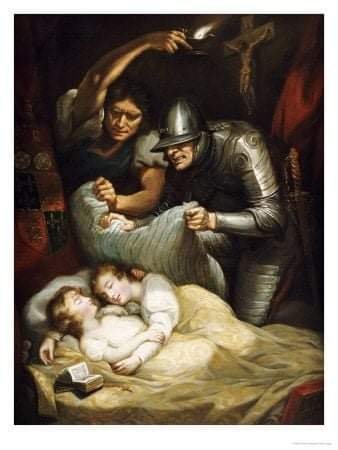
Not long after King Edward IV died after a three week illness in 1483, an enduring mystery tinged with wickedness took place in London. 12 year old Edward V, King of England and 9 year old Richard of Shrewsbury, Duke of York, were Edward IV’s only sons and rightful heirs to the throne. Considered too young yet to rule, they were housed in the Tower, under the protection of their uncle, Lord Protector Richard, Duke of Gloucester.
This was supposed to be for just a short while so as the 12 year old Edward V could mature before his coronation as King. A date for it had already been set for said event. But the coronation would never take place and both boys would vanish without a trace. Initially, the coronation was postponed by their uncle when it was claimed that the boys were illegitimate heirs to the throne. King Edward IV’s marriage to their mother Elizabeth Woodville was declared void, as he had a pre-marriage contract written out with Lady Eleanor Butler. The two youngsters were now to be housed indefinitely in the Tower as Parliament discussed and debated upon the right course of action to take in such a scandalous event.
Their father’s brother the Duke of Gloucester duly took the throne for himself, as King Richard III, but the boys disappeared without a trace. It has never been discerned what happened to the Princes, but it’s historically been believed that they were murdered – specifically smothered in their sleep by James Tyrell, so their uncle could ascend to the throne himself. Thomas More penned a controversial account of the event, which he claimed was given to him by eyewitnesses. “Richard’s men went into the Tower of London bedchamber in the middle of the night, keeping down by force the featherbed and pillows hard unto their mouths, that within a while, smothered and stifled, their breath failing, they gave up to God their innocent souls.”
Many contemporary dignitaries pointed the finger of blame at King Richard III, as did Shakespeare in his plays. Support for King Richard III waned even further when it was rumored that he had killed his Queen Anne Neville, in order to marry his niece, Elizabeth, daughter of Richard IV. In the years that followed the disappearance, a number of men came forward claiming to be either Edward V or Richard, never with any proof to their claims. Then, in 1674, almost 200 years after their last sighting, workmen made a grisly discovery buried 10 feet deep under a staircase that was demolished for renovation in the Tower; two small human skeletons enclosed in a box. Without any such thing as DNA testing way back then, it could not be proven who the bones belonged to, and whether or not they solved the century’s old mystery. Buried at such a depth it’s possible that the bones were Roman. But the general belief, which persists today, is that they are the bones of the two brothers, who were killed off by their power hungry uncle. The remains which were found partially covered in velvet – perhaps an indication of aristocracy – were re-buried by King Charles II at Westminster Abbey. As for Richard III, his stay as King would be short lived. He was dead within two years, slain in battle by allies of Edward IV who always believed he had done the dastardly deed. He remains the last King of England to die in battle. The allies had hoped to rescue the brothers from the Tower.
In 1933 the bones of the youngsters were examined by anatomist Professor William Wright and dental expert Lawrence Tanner. It was concluded that the age of the remains corresponded closely to that of the missing Princes. However, the roughhousing approach to the examination has been much criticized and adequate testing to determine the sex of the remains was not conducted. Incredibly, more than 500 years later, in a car park in modern day Leicester, an archaeological dig uncovered the bones of King Richard III. Using radio carbon dating and mitochondrial DNA from one of his descendants, the skeleton was identified. Despite repeated requests, the same technique has of yet not been permitted to be carried out on the potential royal remains of the boys. While many modern historians are in agreement with Richard III being the likely culprit, without permission to exhume the remains by Westminster Abbey, the malicious medieval mystery regarding the fate of the Princes of the Tower prevails.
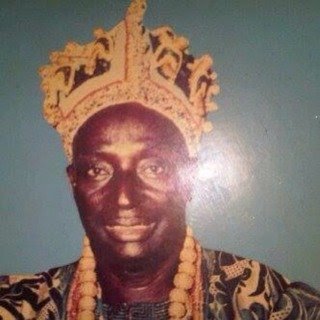
late Okere of Saki Land, OBA (SHEIK) TIJANI ABIMBOLA OYEDOKUN II JP.
Originally part of the old Oyo Empire, Shaki became a Yoruba refugee settlement after the destruction in 1835 of Old Oyo (Katunga), 70 miles (113 km) east-northeast, by Muslim Fulani conquerors. For those who are unfamiliar with its history, Shaki occupies a very important place among Yoruba towns.
According to the famous Yoruba historian, the Reverend Samuel Johnson, the Okere’s (the king’s) palace at Shaki was built “on the very spot” on which the corpse of Ofinran, a deceased Alaafin born of a Bariba woman fell down and “had to be bound up afresh before they (the funeral cortege) could proceed”.
The funeral train was on its way to old Oyo from Igboho, the new capital of the Oyo Empire. It would be recalled that after the fall of old Oyo (‘Eyeo’ or ‘Katunga’) to an invading Fulani army from Ilorin circa 1837, an Alaafin, Eguguojo moved his palace up north to Igboho, northwest of Shaki. Hence, and today, close to Igboho and within the precincts of the old Oyo Games Reserve lie the burial tombs of four Alaafins: – Eguguojo, Orompoto, Ajiboyede, and Abipa.
However, another historian, late Chief Ojo, the Bada of Shaki gave the meaning of the town’s name as “Sa-kiri”, meaning ‘a fleeing refugee’. The fleeing refugees, according to sources finally found a respite on the Asabari Hill located in the town. Hence, the ‘oriki’ praise – name of a Shaki indigene is incomplete without the addition of ‘Omo Asabari’, (‘son of Asabari’).
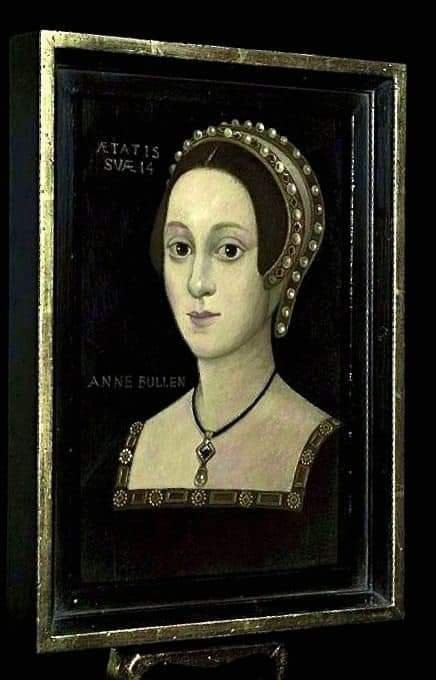
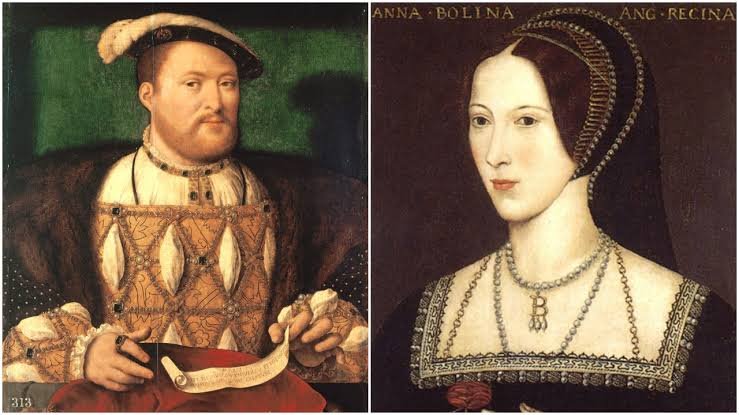
On April 26th, 1536, Anne Boleyn asked her chaplain, Matthew Parker, to meet with her. She had a special request to ask of him, something of utmost importance. Perhaps she had a premonition of some sort.
We know little of what took place during this meeting, only what Parker himself wrote of it later. Anne Boleyn asked him to make a promise to her, and Parker spent the rest of his life trying to fulfill it.
The records indicate the weather in spring of 1536 was lovely, but Anne could feel the dark clouds gathering around the throne. A storm was brewing, but the conspirators were careful to leave little trace of which direction they were heading. Anne Boleyn was a fighter, but she could not fight what she could not see.
The courage and strength it took for her to behave as though everything was normal still amazes me. Anne went through the motions of being a Tudor queen with dignity and poise. The king, too, gave all outward appearance of normalcy.
Though Henry was spending his nights in other palaces – where Jane Seymour was always lodged nearby – he appeared at Anne’s side for events, and they were able to present the image of a cordial relationship to the public. He dined in Anne’s apartments, went with her to mass, and still insisted foreign courts should recognize the legitimacy of his marriage. He even devised a bizarre ruse to force Eustace Chapuys into bowing to Anne, seizing the underhanded victory with apparent delight.
But behind the scenes, Henry was devising a way to rid himself of the woman he had come to despise. As he stood smiling by her side, he was plotting her death.
Anne had to have known Henry was trying to get rid of her. If we know about it – and we do, from the letters of Chapuys to the Imperial court – then Anne heard the gossip, too. She still had powerful supporters who kept her informed of what was going on.
Anne had to have been terrified, sick with worry and anxiety. What was Henry planning? It looked like he was trying to find a way to annul their marriage. He was asking bishops about the validity of his union to Anne. It had gotten to the point where Princess Mary’s supporters were writing to her and telling her to be of good cheer, because Anne would be gone soon.
On the 21st of April, Chapuys noted as an aside that Cromwell had told the French ambassador not to broach the topic of Princess Elizabeth’s marriage. Anne, who supported the French, must have been disturbed that there was no discussion of a marital alliance for the princess. Whatever was happening, it was affecting her beloved daughter, as well.
On the 24th of April, a commission of Oyer and Terminer was created at Westminster. The court dealt with treason charges, and other serious crimes, and so Anne may have thought it was for someone who had denied the royal supremacy, assuming she knew about that it had convened. She had so many other things on her mind, she might not have given it a second thought.
The commission was tasked with investigating and drawing up the indictment against Anne Boleyn for treason and adultery. The day after the commission was created, Henry wrote a letter referring to Anne as his “entirely beloved” wife. The wife he had already decided would have to die in order to ensure his marriage to Jane Seymour was unchallenged, and his heir with her was entirely legitimate. Even as Henry wrote those words, he knew Anne Boleyn would be dead before the letter arrived at its destination.
Anne’s days were numbered, though she was unaware of it as yet. She knew something was coming, at any rate, and Anne Boleyn was a woman who tried to meet her problems head-on.
On the 26th, she asked her chaplain, Matthew Parker, to meet with her. Though we don’t know the details of how the meeting was arranged, Anne would have wanted it to be private. She had a promise she wanted to extract from him, and she wouldn’t have wanted it to be overheard. It seems she was successful at keeping it quiet – no one else, including Chapuys, whose ears were always straining for the faintest sounds of gossip, reported on it. Perhaps she met with Parker under the guise of confession, the sanctity of which even Chapuys would have never dared violate.
Anne asked Parker to promise her he would watch over her baby daughter, Elizabeth, if anything happened to her. She must have seen something in Parker that made her reach out to him – of all the people she could have contacted, including her own extended family, to safeguard Elizabeth and her future.
Parker took the promise he made to Anne seriously, and considered himself bound to it for the rest of his life.
Anne Boleyn was an amazing woman. She managed – somehow – to behave as though nothing were amiss. She performed her court duties, attended mass, even continuing to insist on proper decorum for her courtiers. Anne always managed to keep her composure in public; it was only behind the scenes that she broke down. We don’t have any records of her inner turmoil at this time.
Only the letters of the courtiers and Anne’s privy purse expenses give us insight into what was happening. Anne spent the last weeks of her life ordering items for her daughter. Perhaps, psychologically, Anne was trying to “cover” her daughter as best she could with all of her clothing purchases for the child. Maybe she had the foresight to see Elizabeth would be plunged into reduced circumstances by whatever her father was planning and not be cared for according to her station.
Anne was right – it was the last clothing Elizabeth would receive until her governess wrote a pleading letter begging for funds because Elizabeth had grown out of everything.
Anne had done all she could to prepare Elizabeth for her uncertain future. She had filled Elizabeth’s household with loyal, supportive people, many of whom were extended family members. She had asked a powerful man in the religious reformist movement to protect Elizabeth, and she had dressed her baby warmly for the storm ahead.
Anne walked these last days of April on tenterhooks, waiting to see what Henry had in store for her. She would not have long to wait.
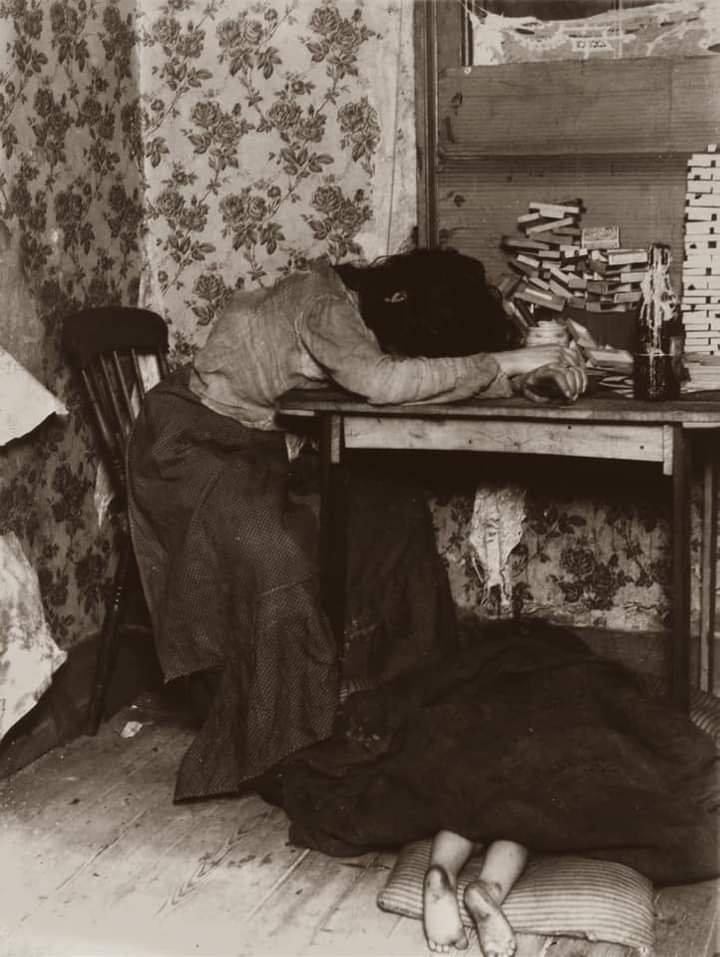
This photograph shows a young Mother, exhausted from spending hours making matchboxes, a pile of which can be seen on the table. At her feet is a young, sleeping baby covered by a blanket. For such homeworkers engaged in the sweated industries there was no division between work and home life. Match-box making was amongst the lowest paid work.
The industry primarily employed women and children who could expect to work an average of 16 hours per day. For every 144 boxes made they received 2 pennies. This photograph appears in an album with a number of other prints depicting sweated labourers and London’s poor. Such albums were often compiled by charities to raise funds and inform the public about the plight of those living and working in London’s poorest areas, such as the East End.
The Act of Succession had been passed by Parliament on 23rd March 1534, the same day that the pope pronounced sentence on Henry VIII’s marriage to Catherine of Aragon. Following Catherine’s appeal to Rome, the pope ruled in her favour and pronounced her marriage to Henry valid. However, back in England, the First Act of Succession declared Henry VIII’s marriage to Anne Boleyn valid and vested the succession in their issue. According to English law, Henry and Catherine’s daughter Mary was now illegitimate and had been removed from the line of succession, and six-month-old Elizabeth, Henry’s daughter by Anne Boleyn, was the legitimate heir to the throne.
The Act required subjects to swear an oath, the Oath of Succession, renouncing any foreign authority and recognising Anne Boleyn as Henry VIII’s wife and their children as legitimate heirs to the succession.
Of course, things would change after Anne Boleyn’s fall in 1536. On 8th June 1536, Parliament passed the Second Act of Succession removing both of Henry VIII’s daughters, Mary and Elizabeth, from the line of succession and declaring them bastards. Parliament confirmed the annulment of Henry VIII’s marriage to Anne Boleyn, which had been proclaimed by Archbishop Cranmer on 17th May 1536, and confirmed the validity of Henry VIII’s marriage to Jane Seymour, which had taken place on 30th May 1536. It described Jane as “a right noble, virtuous, and excellent lady, Queen Jane”, as the king’s “true and lawful wife”, praised her “excellent beauty, and pureness of flesh and blood”, and described the marriage as “so pure and sincere, without spot, doubt or impediment”. Parliament also stated that “the succession to the throne be now therefore determined to the issue of the marriage with Queen Jane.” The new queen wasn’t even pregnant yet, but she would go on to give Henry a son in October 1537, the future Edward VI.
Marshall Idris Deby Itno, 18 June 1952-20 April 2021,was a Chadian Political and Military officer who was President of Chad from 1990 until his death in 2021.
He was also head of the ruling Patriotic Salvation Movement. Deby was of the Bidyat Clan of the zaghawa ethnic group. He took power by leading a rebellion against President Hissene Habre in December 1990 and survived various rebellions and coup attempts against his own rule.
Deby won elections in 1996 and 2001, and after term limits were eliminated he won again in 2006,2011,2016, and 2021.
He was a graduate of Muammar Gaddafi’s world Revolution Center. Several international media sources described Deby’s multi-decades rule as authoritarian.
He was killed in April 2021 while commanding his force against the rebels.
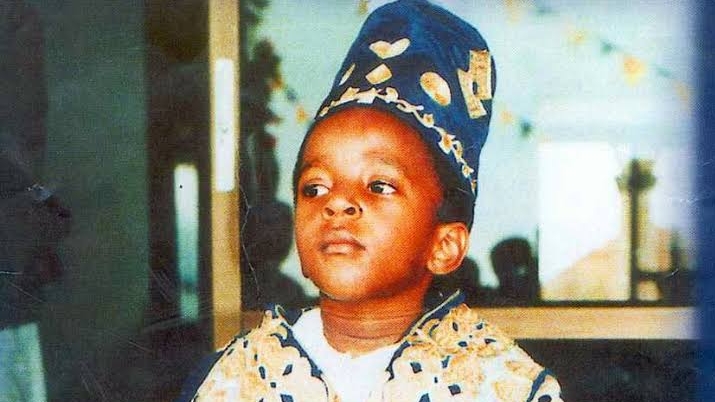
Numerous children will mess around or have a good time outside with their companions at age 3, yet not for King Oyo Nyimba Kabamba Iguru Rukidi IV, who was at that point figuring out how to govern a realm of in excess of 2 million individuals at that youthful age.
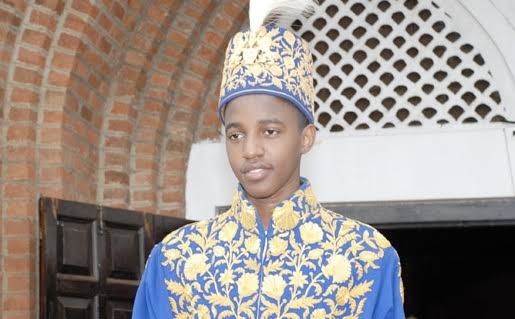
Rukirabasaija Oyo Nyimba Kabamba Iguru Rukidi IV, King Oyo, is the ruling Omukama of Toro, in Uganda. He was brought into the world on 16 April 1992 to King Patrick David Mathew Kaboyo Olimi III and Queen Best Kemigisa Kaboyo. Three and a half years after the fact, in1995, Oyo rose to the seat and succeeded his dad as the twelfth leader of the 180-year-old Toro Kingdom.
Lord Oyo of Toro Kingdom, one of four realms in Uganda, East Africa is holding the record as the “World’s Youngest Monarch” in the Guinness World Records Book.
Young King Oyo Nyimba Kabamba Iguru Rukidi IV of Toro Kingdom
BACKGROUND
What is currently Uganda was comprised of free realms and networks drove by Tribal Chiefs and Kings in pre-pioneer times. Albeit most social orders in Uganda, similar to networks in its north and upper east, were approximately settled by tribe administration structures, different networks, for example, Bunyoro, Buganda, Ankole and Toro were coordinated governments.
In 1966, notwithstanding their capability to partition powers and hence a danger to the early republic, the political forces of the conventional pioneers were abrogated by the patriot development drove by Milton Obote, who contradicted the rulers due to their relationship with British colonialists.
Political disturbance and common conflict overwhelmed the 1970s and 1980s, adding to serious ramifications for social organizations. Large numbers of the pioneers, including Buganda’s Kabaka Mutesa and Toro’s Omukama Patrick Kaboyo, were constrained into outcasts to get away from the public authority of dread. It was not until 1986 that the realms were reestablished by President Yoweri Kaguta Museveni through a change to the Constitution 1993. In pre-pioneer times, the realms could never appreciate the sway they had, however, they would be instrumental in activating the country toward social and monetary recuperation.
THE TORO KINGDOM
Toro lies in the mid-western piece of present-day Uganda, with its capital, Fort Portal. The people group of Toro, known as Batooro or Batoro, make up 3.2 percent of Uganda’s 35.5 million individuals (2012 gauge). The Kingdom is constrained by the tradition of Babiito, whose set of experiences returns similar to the fourteenth century. As per oral history, in 1822, Prince Olimi Kaboyo Kasunsunkwanzi, child of the King of Bunyoro, added the southern piece of the Kingdom of his dad and established what is today known as Toro
Omukama Kaboyo, Olimi III of Toro Kingdom in 1995
Title of king Oyo
Oyo Nyimba is known as Omukama, signifying “King” and Rukirabasaija, signifying “the best of men” in Toro. Despite the fact that he is viewed as Batooro’s sovereign ruler, the authority of Oyo Nyimba is limited to social obligations.
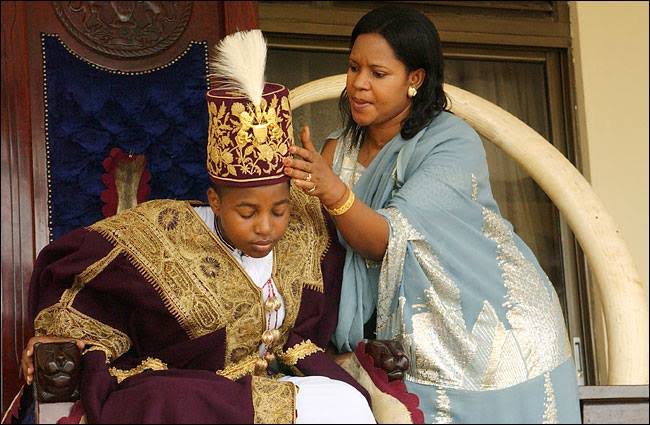
King Oyo and the Queen mother
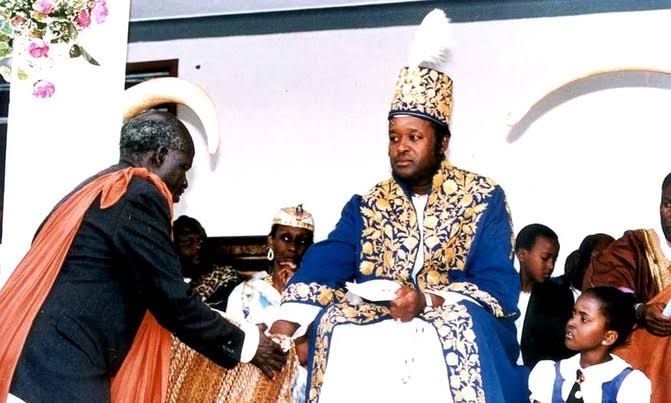
Coronation of the young King Oyo
The demise of his dad King Kaboyo in 1995 just implies that the Crown Prince needed to assume the job of King in his youth. The customs of giving over control of capacity to Oyo started at 2 a.m. on 12 September 1995, seven days after the late King’s internment. They incorporated a counterfeit fight at the passageway of the royal residence, battled between the adversary powers of the “rebel” sovereign and the illustrious armed force, and a trial of Oyo’s heavenly right to the seat, wherein the Omusuga, top of the imperial family, called upon the divine beings to hit Oyo dead on the off chance that he was not of regal blood. After breezing through the assessment, Oyo was permitted to sound the Nyalebe, a holy Chwezi drum, as his progenitors had done. At that point, he was honoured with the blood of a bull and a white hen.
At 4 a.m., Oyo was delegated King amidst an upbeat group and entered the castle as the new leader of the Kingdom of Toro. His first feast was filled in as King, comprising of millet mixture. He sat in the lap of a virgin young lady and swore faithfulness to the Crown while lying on his side on the ground. Social rituals followed a strict function directed by the Anglican Bishop, Eustance Kamanyire. President Museveni went to the crowning ordinance festivities, honoring the new King
Regency
Three reagents were entrusted with supervising the development of King Oyo in the job of King and managing the social undertakings of the Kingdom during the adolescence and youth of the King. At the hour of his delegate, the three officials incorporated his mom, Queen Best (Queen Mother); his auntie/backup parent, Princess Elizabeth Bagaaya; and President Museveni.
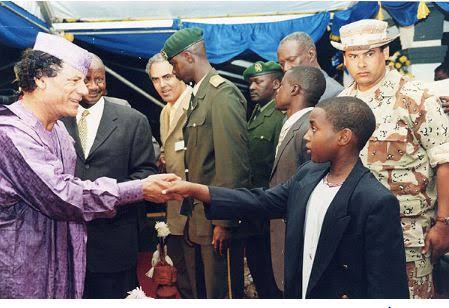
Gaddaffi and 9 years old King Oyo
The late Colonel Muamar Gaddafi, the previous President of Libya, was the supporter of the Kingdom of Toro, who had close binds with the regal family. Ruler Oyo, 9 years of age, named Gaddafi the “protector” of the Kingdom and welcomed him to go to the sixth commemoration of the royal celebration in 2001. Gaddafi made gifts to the Kingdom to help pay for the reclamation of the Palace in Fort Portal.
Education background of King Oyo
One of the King’s key assignments is to lobby for monetary and social prosperity gifts to his subjects. Wellbeing, training, financial and social activities are completely concerned. Likewise, it is critical to construct individuals’ trust in the King and reinforce social character. Oyo ventures to the far corners of the planet with the assistance of his officials and family to look for global help for Toro improvement. Most as of late, in the interest of the Kingdom, Oyo got 100 wheelchairs dispersed to five Toro districts. The Kingdom embraces other magnanimous projects through the Batebe Foundation of Toro, which works a custom curriculum store for youngsters out of luck.
Lord Oyo, who once said his mom was his most noteworthy wellspring of help, desires to achieve the ideal change that his subjects are expecting, with a particular accentuation on wellbeing and schooling.
“I’d prefer to enable my kin, to see them flourishing, to see them out of destitution, to give them that stage or endurance unit so they don’t need to battle to send their children to class or to get cash for transport or to take them to the emergency clinic, while there aren’t that numerous clinics also,” he said.
“His age brings a ton of monetary help from pioneers who need to tutor him and see him succeed,” Ruhweza Religious, a 34-year-old woodworker who lives around the royal residence in Fort Portal was cited by news site CNN in 2010.
“Most Africans are driven by more established individuals who don’t do anything.”
“He is youthful and enthusiastic, and we trust he will give us a superior life and modernize our foundations.”
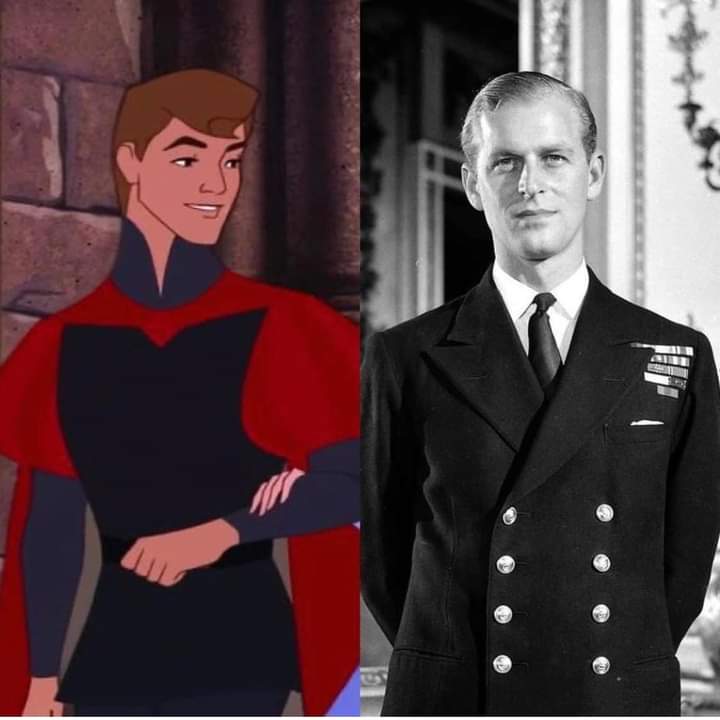
Prince Philip Character in the animated film, Sleeping beauty 1959
Did you know?
When creating the Prince in the Sleeping Beauty in the early 50s, the creators looked for inspiration to the dashing Prince of the time that people knew best: Prince Philip, The Duke of Edinburgh.
This is why Aurora’s Prince Charming is called Prince Phillip. He is also the first Disney Prince to have a name! The animated film eventually came out in 1959✨



 Bash School Of Thought